
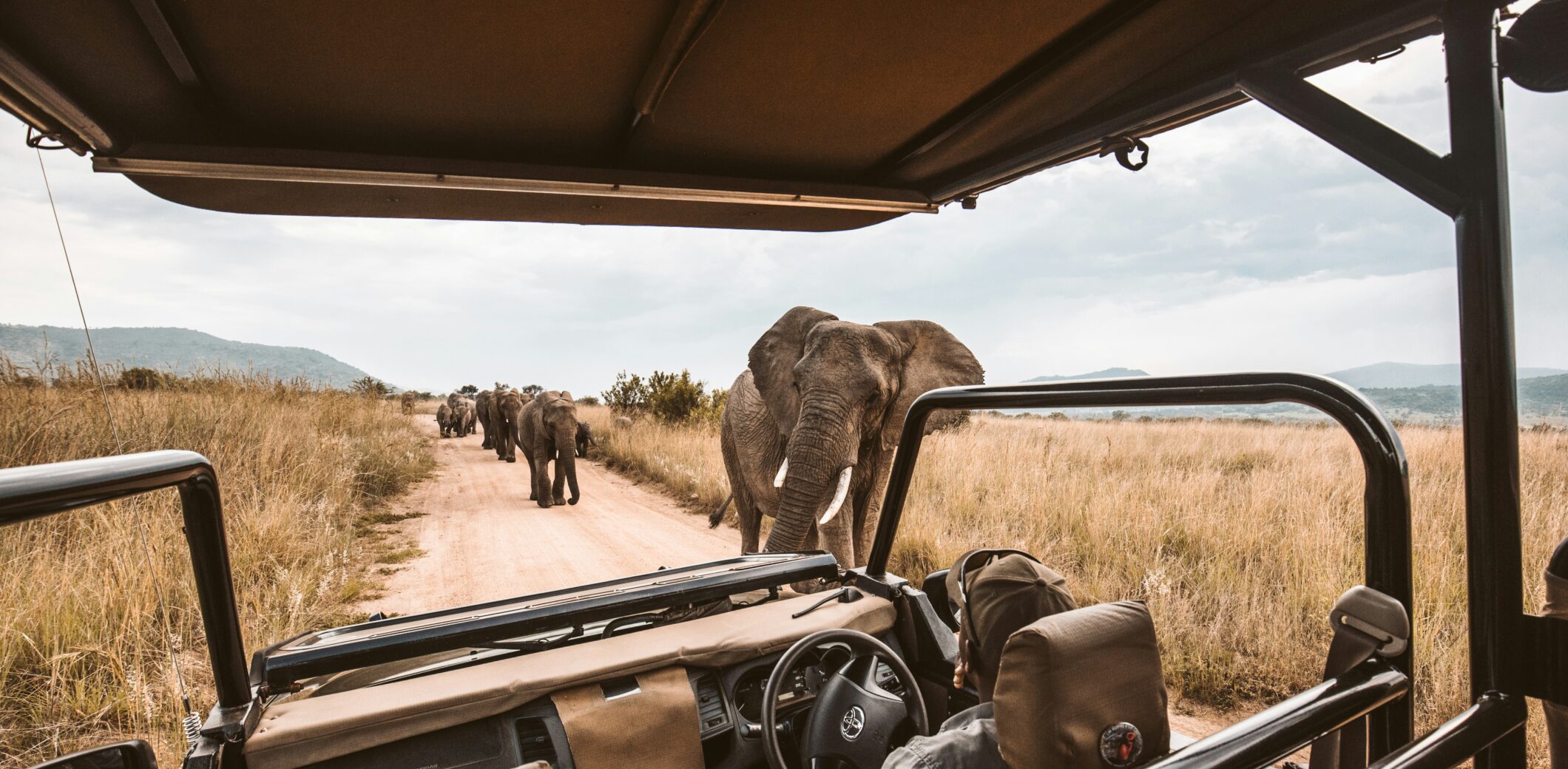

A professional safari itinerary should include a tour overview, a clear day-by-day plan, details for every accommodation, all flights and transfers with timings, a transparent price with inclusions and exclusions, and practical information such as entry requirements, packing, and emergency contacts. Present it so the client can understand the whole tour in a few minutes and find any detail in seconds.
Use the checklist below as a template for every proposal you send.
A quick note on terms: some operators call this document an itinerary, others a proposal or a quote. In this checklist, we mean the full document you send a client: the day-by-day plan plus the price, terms, and next step.
Why a Complete Itinerary Saves You Time.
Every gap in an itinerary becomes a question. “Is breakfast included?” “How long is the drive from the airport?” “Can our 10-year-old go on game drives?”
Each question means another email, another delay, and another moment where the client’s excitement cools. Worse, some clients don’t ask. They just move on to the operator whose proposal felt clearer.
A complete itinerary answers the obvious questions before they’re asked. It shows you know what you’re doing, and it gives the client the confidence to say yes.
The Quick Checklist.
Here’s the full list at a glance. The sections below explain each part.
- Tour overview: title, dates, travelers, route, and a short summary.
- Day-by-day plan with locations and activities.
- Accommodation details for each stay.
- Flights, transfers, and timings.
- Price, inclusions, and exclusions.
- Payment terms and booking conditions.
- Practical information: entry requirements, health, packing, and money.
- Contacts and emergency information.
- About you: your company, team, and reviews.
- A clear next step: confirm, download, or share.
Part 1. Tour Overview.
Start with a snapshot the client can take in at a glance:
- A tour title that reflects the experience (for example, “Kenya and Tanzania Migration Safari, 10 Days”).
- Travel dates and number of nights.
- Names and number of travelers.
- A simple route map or list of destinations.
- How they’ll travel: private or shared vehicle and guide.
- Two or three sentences on why this tour suits them, picking up details from their inquiry, such as an anniversary or a first safari with the kids.
This is also the part a client forwards to their partner or family. Make it good enough to share.
Part 2. Day-by-Day Plan.
The heart of the itinerary. For each day, include:
- Where they’ll be and how they get there.
- How long they’ll travel, such as “transfer time about 3 to 4 hours.”
- What they’ll do, such as game drives, walks, or a free afternoon.
- Meals included that day.
- Where they’ll sleep that night.
Keep descriptions short and specific. “Morning game drive in the Mara Triangle, looking for lions near the Mara River” helps the client picture the day far better than “full day of game viewing.”
Part 3. Accommodation Details.
“Is the tent en suite?” “Can we see the river from our room?” Clients care deeply about where they’ll stay. For each property, include:
- Name and location.
- Room or tent type and bed configuration.
- Meal plan and what’s included (drinks, activities, laundry).
- Two or three highlights that match the client’s interests.
- Good photos of the room, the main area, and the view.
- Any important policies, such as minimum ages for activities.
Complete, current property content makes a real difference here. When descriptions and photos come straight from the property’s own listing, you spend less time copying details and more time tailoring the tour.
Part 4. Flights, Transfers, and Timings.
“Who’s meeting us at the airstrip?” Questions like this are where many follow-ups come from. Be precise:
- International flight details, if you’re booking them.
- Domestic and light-aircraft flights, such as transfers into the Serengeti or the Okavango Delta, with luggage limits (soft bags and weight limits often surprise first-time safari travelers).
- Road transfers with approximate driving times.
- Meeting points and who will meet them.
- Check-in and check-out times where they affect the plan.
Part 5. Price, Inclusions, and Exclusions.
A clear price builds trust. Include:
- Total price and currency.
- Price per person, if that’s how the client thinks.
- What’s included: accommodation, meals, activities, park, conservancy, or concession fees, road transfers, domestic flights, and guide.
- What’s not included: international flights, visas, travel insurance, tips, drinks, and optional activities.
- Optional extras: activities the client can add, such as a balloon safari or a sundowner, with a price per person.
Park fees deserve special attention. They can change during the year, and they’re a significant part of many safari prices. Kenya’s Masai Mara, for example, introduced new fees in July 2026. Show whether fees are included and, if prices could change, say so clearly.
Part 6. Payment Terms and Booking Conditions.
“When do we pay the rest?” Keep this section short and readable:
- Deposit amount and due date.
- Balance due date.
- Cancellation terms.
- How long the quote is valid, especially if rooms are on provisional hold.
Link to your full terms rather than pasting them in.
Part 7. Practical Information.
The details that make clients feel looked after:
- Entry requirements: passports, visas, or travel authorizations. Rules change, so link to official sources.
- Health: vaccinations and health advice. Suggest clients check with a travel clinic, and link to official guidance.
- Packing: clothing colors, layers for cold mornings, and luggage limits for light aircraft.
- Money: currency, card acceptance, and tipping guidance.
- Connectivity: Wi-Fi and phone signal at each property.
Part 8. Contacts and Emergency Information.
If something goes wrong on the tour, nobody should have to search for a phone number. Include:
- Your contact details, including out-of-hours.
- Local ground contacts.
- Emergency procedures and insurance details, including whether their policy covers medical evacuation.
Part 9. About You and Your Team.
Your client is trusting you with a big tour, often before you’ve ever met. Help them get to know you:
- A short introduction to your company and how long you’ve been operating.
- Your guides and vehicles, if they’re part of the tour.
- Reviews from past travelers, or links to where they can read them.
- Any industry memberships and awards.
Part 10. A Clear Next Step.
End by telling the client what to do next, and make it easy:
- How to confirm the booking, ideally with one click or one reply.
- An option to download a copy.
- A simple way to share the tour with the people traveling with them.
How Should You Present the Itinerary?
Content is only half the job. How the itinerary looks and reads matters just as much.
- Put the overview first. Let clients see the whole tour before the details.
- Make it easy to move around. A menu or clear sections let clients jump straight to any day.
- Use photos generously, but make sure they load well.
- Keep paragraphs short. Clients skim before they read.
- Make it work on every screen. Many clients open a proposal on a phone first, then review it properly on a larger screen, or print it. We cover this in Why “Mobile-First” Is a Trap in Luxury Safari Sales.
- Keep your branding consistent, so every proposal from your team looks like it came from the same business.
- Keep your contact details in view, so the client never has to search for how to reach you.
SafariOffice is sales and itinerary software built for safari specialists, so the itinerary, accommodations, and pricing all come together in one branded proposal.
Add destinations, properties, and activities from the content library, and their descriptions and photos come with them. Properties can manage their own listings on SafariOffice for Accommodations, which helps keep the details in your proposals current instead of copied from scattered files and email threads. Save your best tours as templates and adapt them for each new inquiry rather than starting from scratch. Your branding is applied to every proposal, so everything your team sends looks consistent.
Clients can open the digital itinerary on any device or download a copy to print or save, and you can see when they’ve opened it, so you know when to follow up. To see how it all comes together, take a look at this sample digital safari itinerary.
We receive compliments on our itineraries from both direct clients and overseas partner agencies.
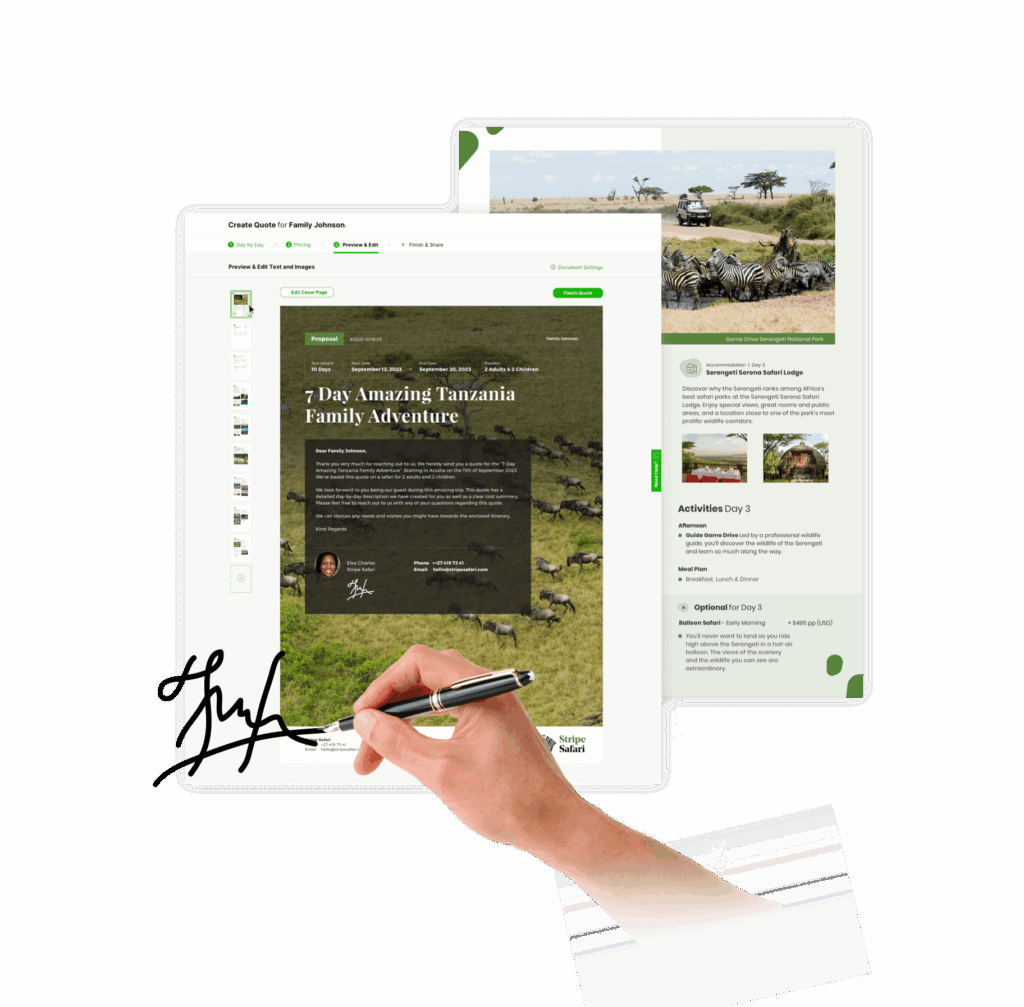
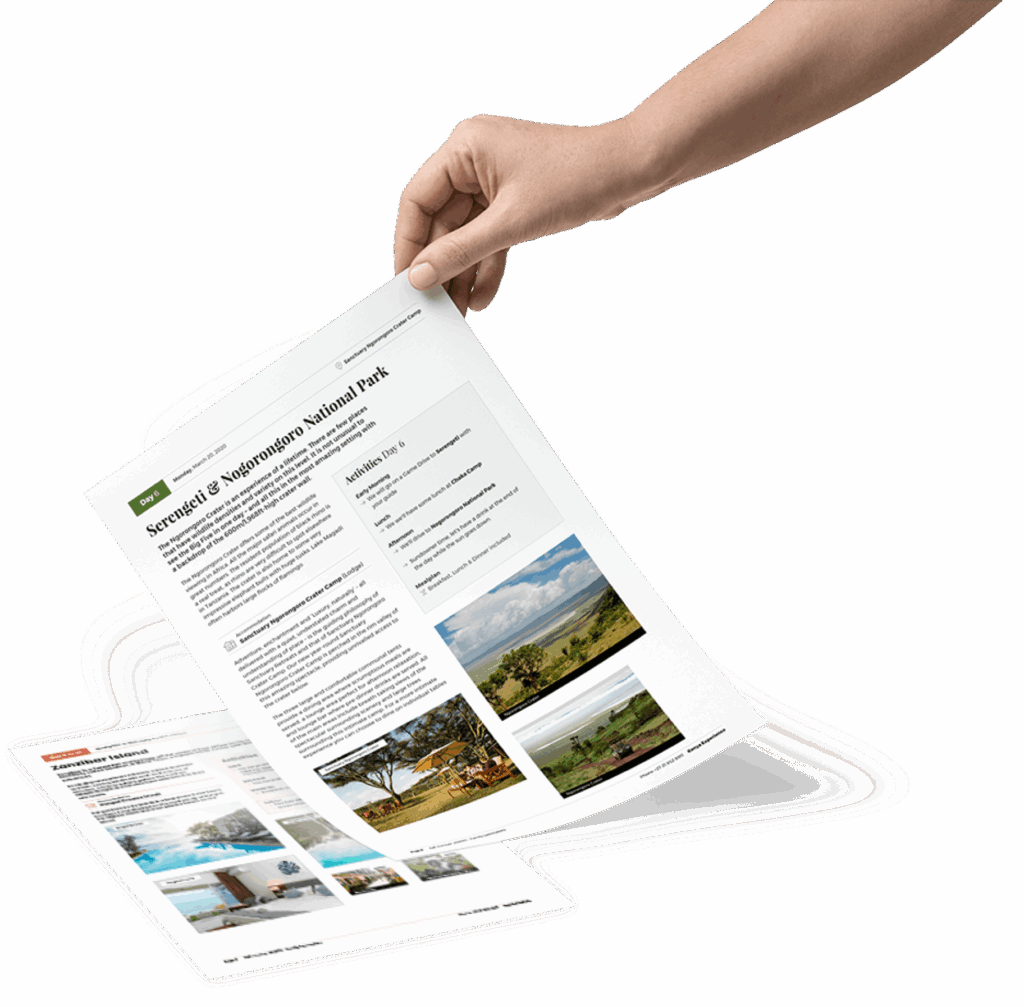
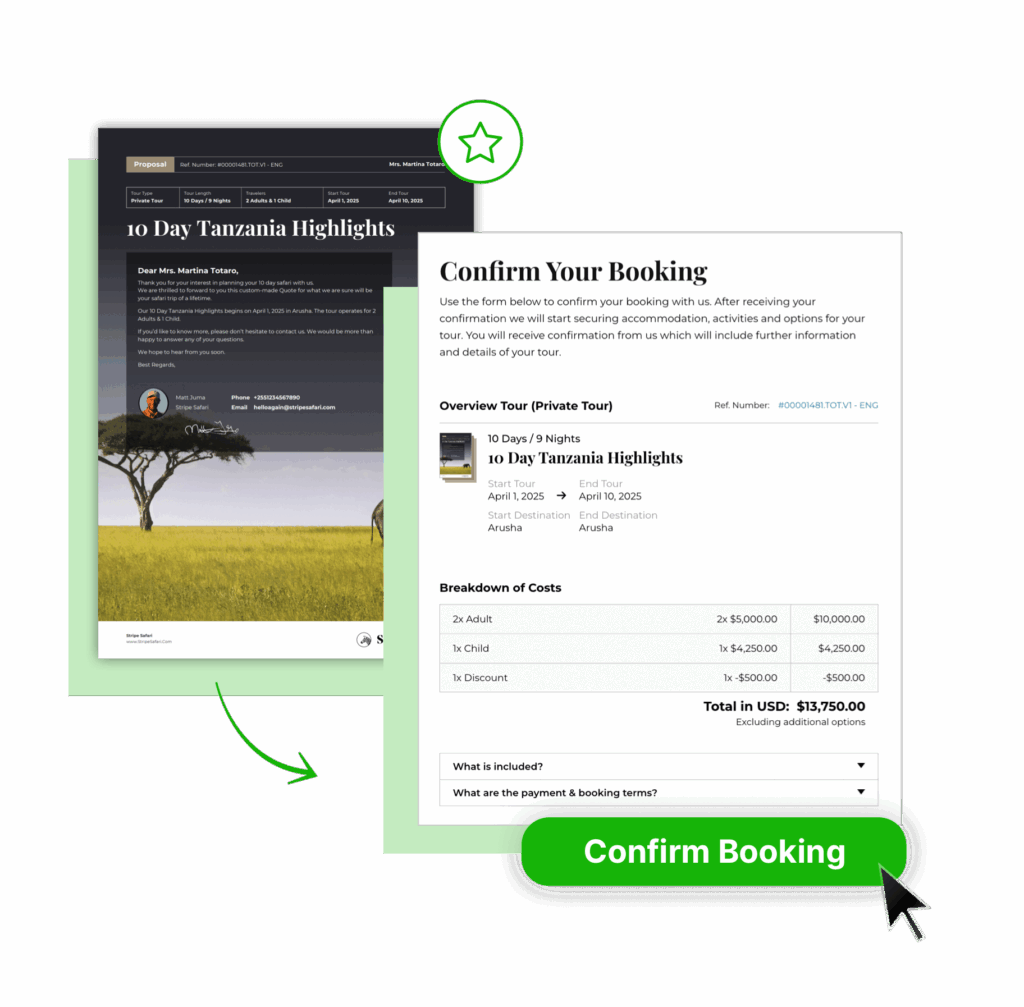
Clients can easily view your quote online, print a copy, and confirm the booking.
Build Tailored Safari Quotes Faster
Create, sell, and market your safari tours, all from one place.
Start with a FREE plan, no credit card needed.
Frequently Asked Questions.
Detailed enough that the client can picture each day and knows what’s included, but short enough to read in a few minutes. Put the overview first and the practical details at the end.
Including them usually makes the price easier to compare and trust. Either way, state clearly whether they’re included, and note that fees can change.
The itinerary is the day-by-day plan. The proposal, or quote, usually includes the itinerary plus the price, terms, and a personal message, and it’s what the client uses to decide.
Many operators and agents send both. A link is easy to update and view on any device, while a PDF is useful for clients who want to print or save a copy.